Coming Soon
Why Your Hiring Process Is Biased by Design
On anchoring effects in sequential evaluation — and what behavioral science says about building fairer, more accurate screening systems.
Behavioral EconomicsEconomist · Analyst · Strategist
I want to understand what drives decisions, in markets, institutions, and people, and get better at informing them. I work at the intersection of behavioral research, quantitative analysis, and applied strategy, and I care most about problems where the analysis changes the outcome.
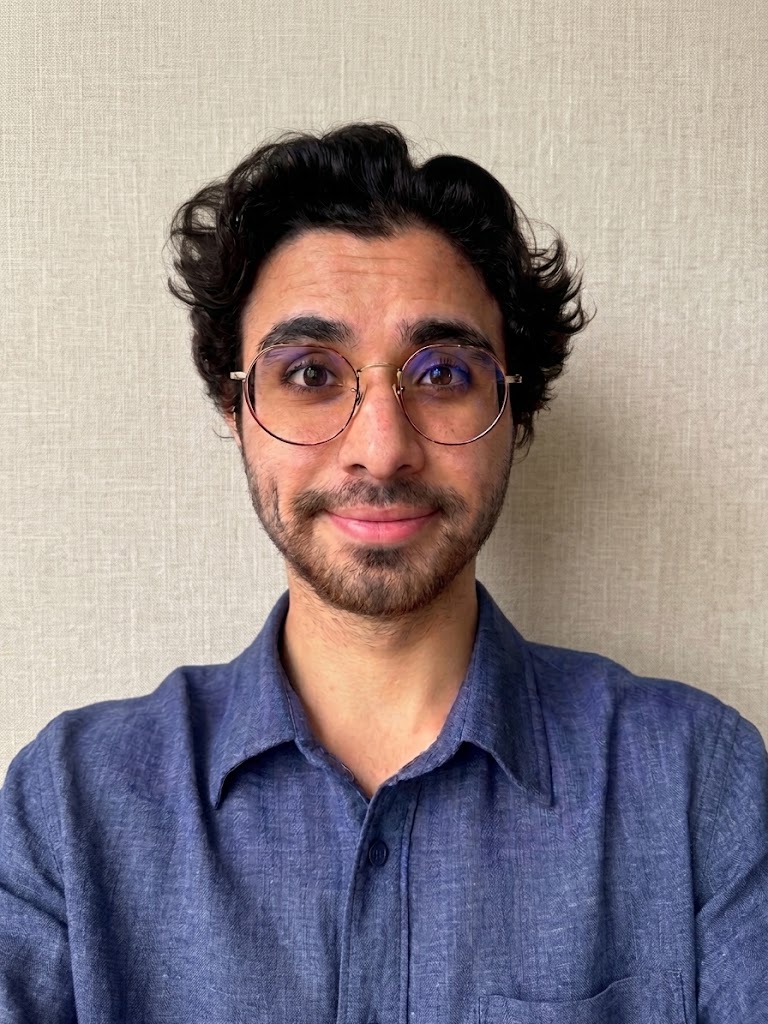
My work sits at the intersection of economics, behavioral science, and strategy. I'm drawn to hard problems, the kind where the first model is wrong, the data is messy, and the answer actually matters. I care about understanding why outcomes happen, not just describing them.
I'm completing a dual degree at Columbia University and Sciences Po Paris in Economics and Political Philosophy, with a special concentration in Business Management at Columbia Business School. My training spans econometrics, experimental design, corporate finance, and strategic analysis across three countries and two intellectual traditions.
Currently: synthesizing climate macroeconomics for policymakers under Jeffrey Sachs, building cost-of-equity estimation pipelines from large-scale financial data.
The throughline across these is the same: rigorous analysis applied to decisions that have real consequences.
Panel cointegration study across 27 Small Island Developing States, 2000–2023. Finds that a one-unit increase in ND-GAIN vulnerability implies ~105 pp more sovereign debt in the long run — independently of income, fiscal policy, and global shock regimes. Identifies an asymmetric ratchet mechanism and provides empirical support for the UN Multidimensional Vulnerability Index.
Formal model of dynamic anchoring in sequential evaluations — examining how early information creates systematic bias in high-stakes screening decisions. Direct implications for hiring, investment committee design, and any multi-stage evaluation process.
Designed and programmed three oTree experiments investigating insurance market failure under climate uncertainty. Built stochastic simulations calibrated to historical rainfall data for field research with Colombian smallholder farmers — linking behavioral lab methods to real policy design.
Constructing firm-level cost of equity measures using Compustat, CRSP, and IBES. Implementing valuation-based and numerical estimation techniques from academic finance literature in reproducible R and Python pipelines.
Assessed institutional risks from AI-generated misinformation; produced policy recommendations on cross-platform governance and safeguards against information fragility for non-technical policymakers.
Columbia University · Jeffrey Sachs
Synthesizing macroeconomic literature and climate policy frameworks for a textbook targeting government officials in Small Island Developing States. Preparing empirical figures and analysis using R, Excel, and LaTeX; fact-checking quantitative content for non-specialist readers navigating complex policy trade-offs.
Columbia University · Ankit Bhutani
Building firm-level cost of equity measures from Compustat, CRSP, and IBES — implementing valuation-based estimation techniques from academic finance literature. Cleaning and validating large panel datasets; translating mathematical models into efficient, reproducible R and Python pipelines.
Columbia University · Ricardo Pommer Muñoz
Designed incentive-compatible oTree experiments examining how information framing and payoff structures shape contract evaluation. Built stochastic simulations calibrated to historical rainfall data; developed R pipelines for data validation, diagnostics, and econometric preparation.
LatAm Signal Terminal
NLP pipeline processing 18,000+ financial news articles to extract daily sentiment signals for five Latin American economies. Strips global factor exposure via OLS residualization; gradient boosting achieves 52.7% directional accuracy out-of-sample. Two patterns survive causal scrutiny with formal placebo testing.
Behavioral Decision Profile
Web-deployed adaptation of the Global Preference Survey instrument, measuring six economic preferences across 28 questions. Benchmarks individual scores against GPS data from 80,000+ respondents across 76 countries and classifies profiles into eight behavioral archetypes.
Global University Discovery Platform
Full-stack application helping students discover and compare 1,500+ universities worldwide. Implements dynamic search, preference-based ranking algorithms, and personalized filtering — deployed on Vercel and Render.
Behavioral Finance Assistant
GPT-powered tool identifying investor cognitive biases and generating context-dependent strategy nudges. Models salience and reference effects to improve decision quality under uncertainty.
BA, Economics — GPA: 4.03/4.00
New York · 2022 – 2026
GS Honors Society · Dean's List · Ilse S. Mintz Scholarship
Business Management
45 students admitted · Corporate Finance (A+) · Strategy Formulation · Marketing Management
BA, Political Philosophy — Cum Laude
Reims, France · 2022 – 2026
Dual Degree
Highly selective joint degree with Columbia University,
Cum Laude (top 10%)
A line of thinking worth writing down. Sometimes an R session, sometimes a model, sometimes just a question I can't stop turning over. On behavioral economics, markets, and how decisions actually get made.
On anchoring effects in sequential evaluation — and what behavioral science says about building fairer, more accurate screening systems.
Behavioral EconomicsHow switching languages reshapes the way I frame risk, morality, and strategy — and what the research actually says about it.
Language & CognitionWorking through macroeconomic signals, political risk, and capital flow dynamics across Latin America using R. What the models say, and where I disagree with them.
Macro · MarketsOpen to behavioral science research, strategy, and analysis conversations, particularly at the intersection of applied decision-making and data. Always glad to talk about interesting problems.